 LASER INDUSTRY Blog
How to choose cutting, welding, or cleaning equipment
Define the part, compare the complete system, test real samples, calculate operating cost, and prepare safety and service evidence.
Read buyer guideThese publishers explain laser processes, safety concepts, machine architecture, and production quality. Links lead to the original publishers; LASER INDUSTRY does not claim ownership of their articles.
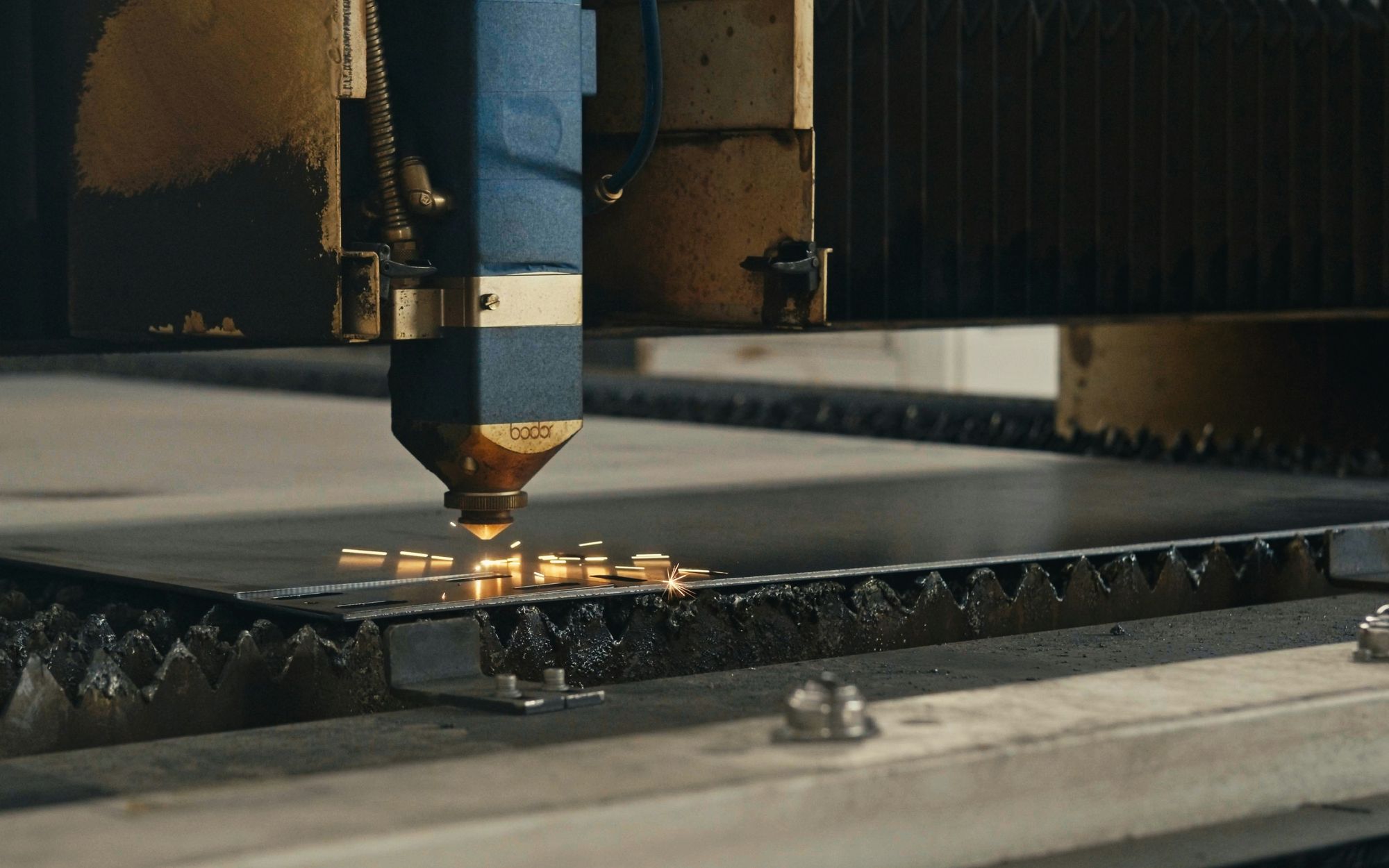
Use these references to frame an RFQ, understand process limits, and prepare questions for sample testing.
LASER INDUSTRY Blog
Define the part, compare the complete system, test real samples, calculate operating cost, and prepare safety and service evidence.
Read buyer guide Xometry
Beam generation, fusion and flame cutting, remote cutting, tolerances, and material considerations.
Read original TWI
TWI
An engineering overview of laser-cutting variants and the process factors that affect production results.
Read originalTWI
Conduction and keyhole modes, joint preparation, equipment factors, and process-control questions.
Read original Laserax
Ablation thresholds, selective removal, pulsed and continuous beams, extraction, and applications.
Read originalLaserax
Machine architecture, power class, scanning, integration, and application fit for industrial cleaning.
Read originalXometry
Materials, machine types, engraving depth, tolerances, design details, and inspection considerations.
Read originalLaserax
Compare laser, dot peen, inkjet, and labels by permanence, cycle time, geometry, and traceability.
Read originalLaserax
Gas, solid-state, fiber, liquid, and semiconductor lasers explained through gain media and industrial uses.
Read originalLaserax
Beam quality, efficiency, maintenance, and material-processing applications of fiber laser sources.
Read originalRegulatory duties vary by market, machine class, installation, and material process. Use authoritative sources to prepare questions for your supplier and safety officer.
 European Commission
Official explanation of CE marking, manufacturer responsibilities, and how product requirements are communicated.
Read original US FDA
Official information center for electronic-product radiation control and laser-product obligations in the United States.
Read original OSHA
OSHA
Workplace guidance introducing laser classes, hazard controls, engineering measures, and training topics.
Read originalLaserax
Classification, enclosure logic, IEC and regional context, and the practical limits of a Class 1 label.
Read originalTWI
Relevant standards categories that help frame machine, workplace, welding, and safety documentation requests.
Read original NIOSH
NIOSH
Noise-control and hearing-conservation references for machines, chillers, extraction, and production cells.
Read originalThese organizations are useful for application knowledge, safety training, events, research networks, and industrial-laser communities.
The Association of Laser Users serves industrial laser users, job shops, suppliers, and research organizations.
Official siteA network for laser technology and processes connecting French industrial users, suppliers, and research organizations.
Official siteLaser applications, safety resources, training, standards, conferences, and corporate membership.
Official siteA working group promoting lasers as industrial manufacturing tools across users, manufacturers, and research.
Official siteAn industry-research platform for laser technology, photonics, policy influence, and scientific cooperation.
Official siteThe Scientific Society for Laser Technology and Photonics, with links to manufacturing research and the LiM conference.
Official siteThe Swiss laser and photonics network supporting industry-research exchange, events, and technology visibility.
Official siteThe European Photonics Industry Consortium, including laser micro-processing and supply-chain activities.
Official siteA European photonics technology platform with manufacturing and innovation working groups.
Official siteLASER INDUSTRY is not stating that it is a member, partner, sponsor, accredited supplier, or endorsed by any listed organization. Verify current membership, training, standards, and event information on each official website.
Send your material, drawings, production target, delivery country, and acceptance criteria. We will map the requirement to a Product Alliance and identify the evidence needed for your market.