
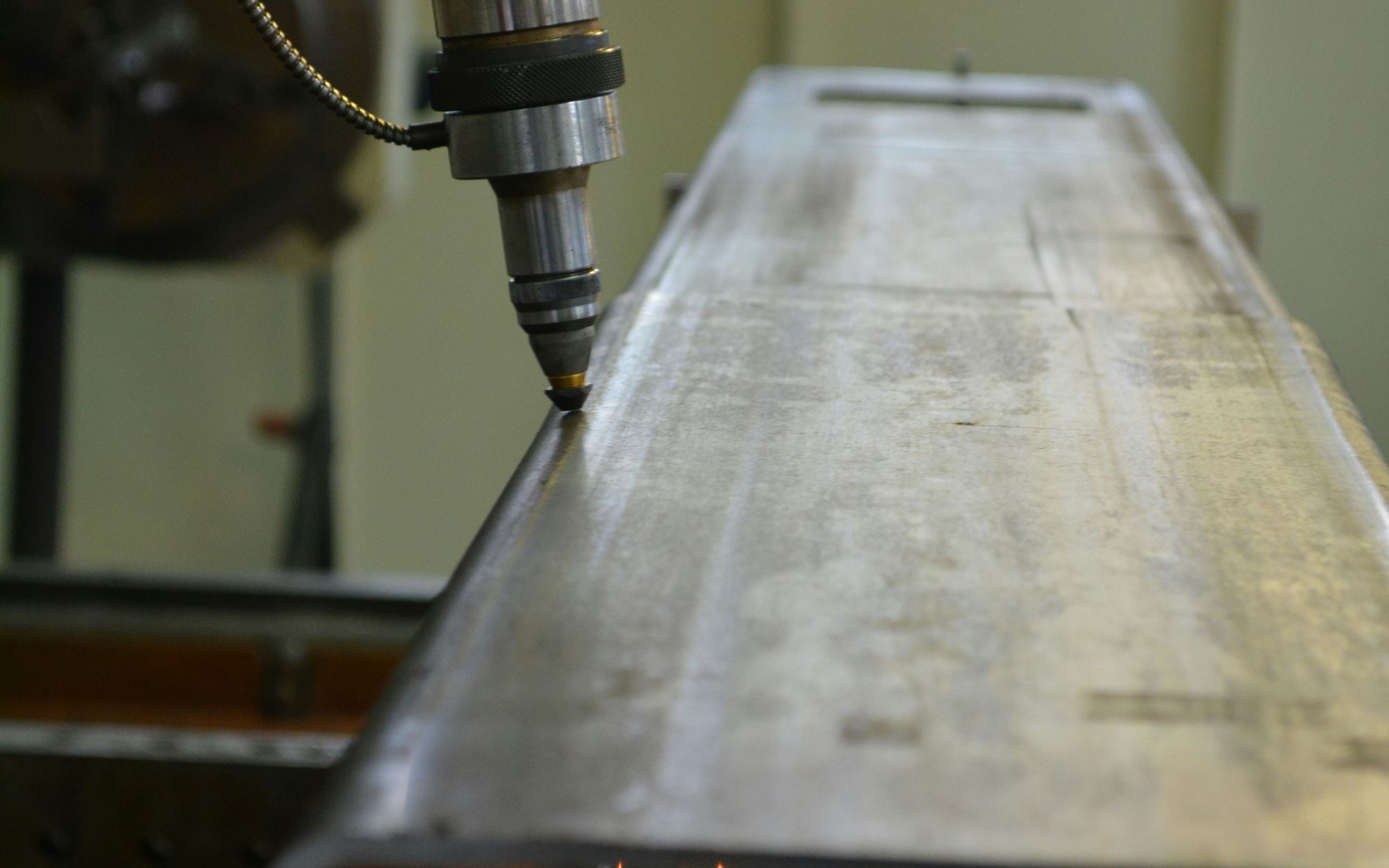
Lasers are used across modern manufacturing because a focused beam can mark, clean, texture, remove, drill, cut, weld, or strip material with minimal mechanical force. The harder question is not whether lasers work; it is which process matches your part, material, tolerance, volume, safety requirements, and cost model.
Quick Answer
The main applications of lasers in manufacturing are laser marking, surface texturing, laser ablation, laser drilling, laser cutting, laser welding, and wire stripping. Engineers select a laser process by evaluating material and thickness, feature size, joint or coating geometry, tolerance, heat sensitivity, throughput, automation, safety controls, consumables, and total cost of ownership.
ASME summarizes these seven categories in its overview of laser applications in manufacturing. This guide extends that framework from a buyer's perspective: what each process is good at, where it fails, and what evidence to request before purchase.
Seven Applications and Where They Fit
| Application | Purpose | Best-fit conditions | Main decision variables |
|---|---|---|---|
| Laser marking | Permanent identification and traceability | Parts needing lot codes, serial numbers, barcodes, or logos | Material, contrast, depth, readability, wear or sterilization exposure |
| Surface texturing | Controlled roughness or functional patterns | Grip, bonding preparation, optical behavior, or implant-surface requirements | Pattern size, depth, substrate protection, function test |
| Laser ablation | Selective material removal | Thin layers, coatings, contaminants, sensitive components | Layer contrast, pulse length, heat input, repeatability |
| Laser drilling | Small or high-aspect-ratio holes | Filters, nozzles, cooling features, medical or electronic parts | Diameter, taper, recast, positional tolerance, throughput |
| Laser cutting | Profiling and controlled-depth cutting | Sheet metal, tubes, polymers, ceramics, precise components | Material, thickness, edge quality, assist gas, tolerance |
| Laser welding | High-precision joining | Enclosures, sensors, batteries, tubes, filters, dissimilar combinations | Fit-up, joint design, shielding, penetration, strength |
| Wire stripping | Insulation or shielding removal | Delicate wires, mid-span exposure, sensor and cable assembly | Insulation type, wire gauge, exposure length, conductor protection |
1. Laser Marking for Traceability
Laser marking creates permanent machine-readable and human-readable identification, including serial numbers, lot codes, date codes, barcodes, data-matrix codes, and logos. It is common where parts must remain traceable through production, assembly, sterilization, service, or recall handling.
The process works only when the mark remains readable after the complete life cycle. For medical devices, that can mean repeated sterilization. For automotive or aerospace components, it can mean wear, fluids, coating, or cleaning processes.
Define before purchase
- Material, coating, color, and surface finish
- Code type, module size, quiet zone, and required grade
- Mark depth or contrast requirement
- Downstream wear, cleaning, sterilization, or chemical exposure
- Cycle time, marking area, and verification method
Fiber, CO2, and UV lasers suit different material and contrast problems. A supplier should provide a readability test on the actual part, not only on a sample tag.
2. Surface Texturing and Laser Preparation
Laser surface texturing creates controlled roughness or micro-patterns that can support adhesion, grip, wetting behavior, optical performance, or biological integration. Related laser cleaning and preparation processes remove oxide, coating, or contamination before welding, bonding, coating, or inspection.
The purchase decision should be based on a functional result, not a visually attractive pattern. Define the required roughness, pattern geometry, contact angle, adhesion value, wear result, or cleanliness criterion before equipment is specified.
Ask for tests that measure
- Texture depth and repeatability across the scanning area
- Change in the base material
- Cleanliness or residue after processing
- Effect on downstream welding, bonding, coating, or inspection
- Cycle time for the actual area and pass count
3. Laser Ablation for Selective Removal
Laser ablation removes material layer by layer with a focused beam. It is useful when a process must remove a coating, film, contaminant, or small volume of material without mechanical contact or excessive heat.
Ablation is material-sensitive. Absorption depends on wavelength, pulse duration, power density, scan strategy, and number of passes. The same settings can behave differently on polymers, metals, ceramics, glass, or multilayer products.
Specify before purchase
- Layer stack and thickness range
- Substrate that must be preserved
- Removal rate and acceptable heat input
- Edge definition and residue handling
- Process monitoring or endpoint detection, if required
- Fume extraction and filter requirements
4. Laser Drilling for Precision Holes
Laser drilling is used where mechanical drilling cannot reach the required diameter, aspect ratio, placement accuracy, or material compatibility. Applications include nozzles, filters, cooling features, printed electronics, medical components, and precision flow paths.
The key engineering trade-off is usually throughput versus hole quality. Smaller holes, tighter pitch, lower taper, and reduced recast normally require more process control and may reduce cycle rate.
Request evidence for
- Hole diameter, roundness, taper, and positional tolerance
- Recast, spatter, debris, and heat-affected zone
- Material and thickness combinations
- Drilling method: percussion, trepanning, or helical drilling
- Inspection method and sample size
5. Laser Cutting for Profiling and Fine Features
Laser cutting uses a focused beam to separate material or produce controlled-depth features. It is widely used for sheet metal, tubes, profiles, polymers, ceramics, and precision components where burr-free edges, narrow kerf, or fine geometry are required.
Cutting performance depends on more than laser power. Material, thickness, beam delivery, nozzle condition, cutting speed, focus, and assist gas all affect edge quality, dross, striation, and dimensional stability.
Document for production evaluation
- Material grade and thickness range
- Maximum sheet or tube dimensions
- Smallest feature, hole size, and kerf tolerance
- Acceptable dross, edge roughness, and heat tint
- Assist gas type, pressure, and purity
- Nesting efficiency, throughput target, and material handling
Nitrogen and oxygen assist gas create different edge and cost trade-offs. Purity and pressure should be validated against your acceptance criteria rather than assumed from a generic parameter table.
6. Laser Welding for Controlled Joining
Laser welding delivers concentrated energy into a small spot, which can produce narrow welds, low heat input, high travel speed, and repeatable penetration on suitable joints. It is used for enclosures, sensors, batteries, tubes, filters, electrical components, and precision assemblies.
Its main limitation is also its strength: the energy is concentrated. Poor fit-up, contamination, clamping error, or wrong shielding can create porosity, undercut, cracking, or inconsistent penetration.
Define before comparing machines
- Material and thickness range
- Joint type and maximum gap or misalignment
- Penetration and strength requirement
- Shielding gas and wire-feed strategy
- Clamping, fixture, or motion system
- Distortion allowance and inspection method
For flexible fabrication and repair work, a handheld laser welder can reduce routing complexity. For repeated components, a platform, fixture-based, or robotic system may provide better process control. The choice should follow part mix and quality requirement, not machine trend.
7. Laser Wire Stripping
Laser wire stripping removes insulation or shielding from wires and cables without contacting the conductor. It is useful for fine wire gauges, bonded assemblies, mid-span exposure, and applications where mechanical stripping could cut, deform, or stress the conductor.
The process must be qualified by insulation type and wire construction. Insulation thickness, filler, shielding, adhesive layers, conductor reflectivity, and exposure length all affect parameter selection.
Specify
- Wire gauge and insulation material
- Shield, binder, or adhesive layers
- Strip length and mid-span location
- Allowed conductor damage or exposure
- Production rate and feeding method
- Fume extraction for insulation byproducts
How to Choose Between Laser Processes
- Define the function. Identify whether the laser must identify, texture, remove, drill, cut, join, or expose a feature.
- Define the part. Record material, thickness, coating, geometry, access, clamping, and downstream processes.
- Define acceptance. Set measurable criteria for depth, cleanliness, edge quality, penetration, readability, strength, or cycle time.
- Screen process risk. Heat input, reflection, fume, fixture tolerance, and material sensitivity decide feasibility more than headline power.
- Request a configuration-specific test. Test your material and part geometry against the written acceptance criteria.
- Compare total cost. Include installation, utilities, gas, consumables, extraction, spares, training, service, and downtime.
Common reasons laser projects fail
- Choosing equipment by wattage before defining the part
- Assuming a thin-metal demo proves performance on a different joint or coating
- Ignoring fit-up, clamping, cleanliness, or shielding in welding
- Skipping readability validation after wear, cleaning, or sterilization
- Underestimating assist-gas, extraction, and filter requirements
- Treating laser safety as an accessory rather than a production-system requirement
- Failing to define spare-parts lead time and service response
What to Send for a Laser Application Review
To shorten the selection process, send part drawings or photos showing the process zone, material and thickness, required feature or joint, tolerance and acceptance criteria, monthly volume, target cycle time, current process and reason for change, workshop power supply, installation constraints, and safety or extraction requirements.
LASER INDUSTRY reviews laser manufacturing requests against the part, material, process zone, tolerance, production volume, safety requirements, and service region. We then freeze the laser source, optics, motion or handheld format, assist gas, extraction, consumables, and acceptance test before quotation.
FAQ
What are the main applications of lasers in manufacturing?
The main applications are marking, surface texturing, ablation, drilling, cutting, welding, and wire stripping. Each application solves a different production problem and requires its own material, tolerance, safety, and acceptance testing.
How do I choose the right laser process?
Start with the required function, then evaluate material, thickness, geometry, tolerance, heat sensitivity, throughput, safety controls, and total cost. The final decision should be supported by a test on your actual part.
Is laser processing always faster than traditional machining?
No. Lasers can be faster and cleaner for suitable fine features, thin materials, selective removal, or precise welding, but traditional machining, blasting, chemical processing, or arc welding can remain more economical for other geometries and volumes.
What evidence should a laser equipment supplier provide?
Ask for a configuration-specific evidence pack: tested parameters on your material, acceptance-test result, utility requirements, safety documentation, consumables list, spare-parts lead times, warranty scope, and English documentation.