When should a factory choose platform welding instead of handheld?
Choose platform welding for repeated parts where fixture control, path accuracy, and recipe management matter more than operator mobility.

Platform laser welding is a fixture-based laser welding process in which a programmed motion platform or machine axis positions the beam along repeatable weld paths.
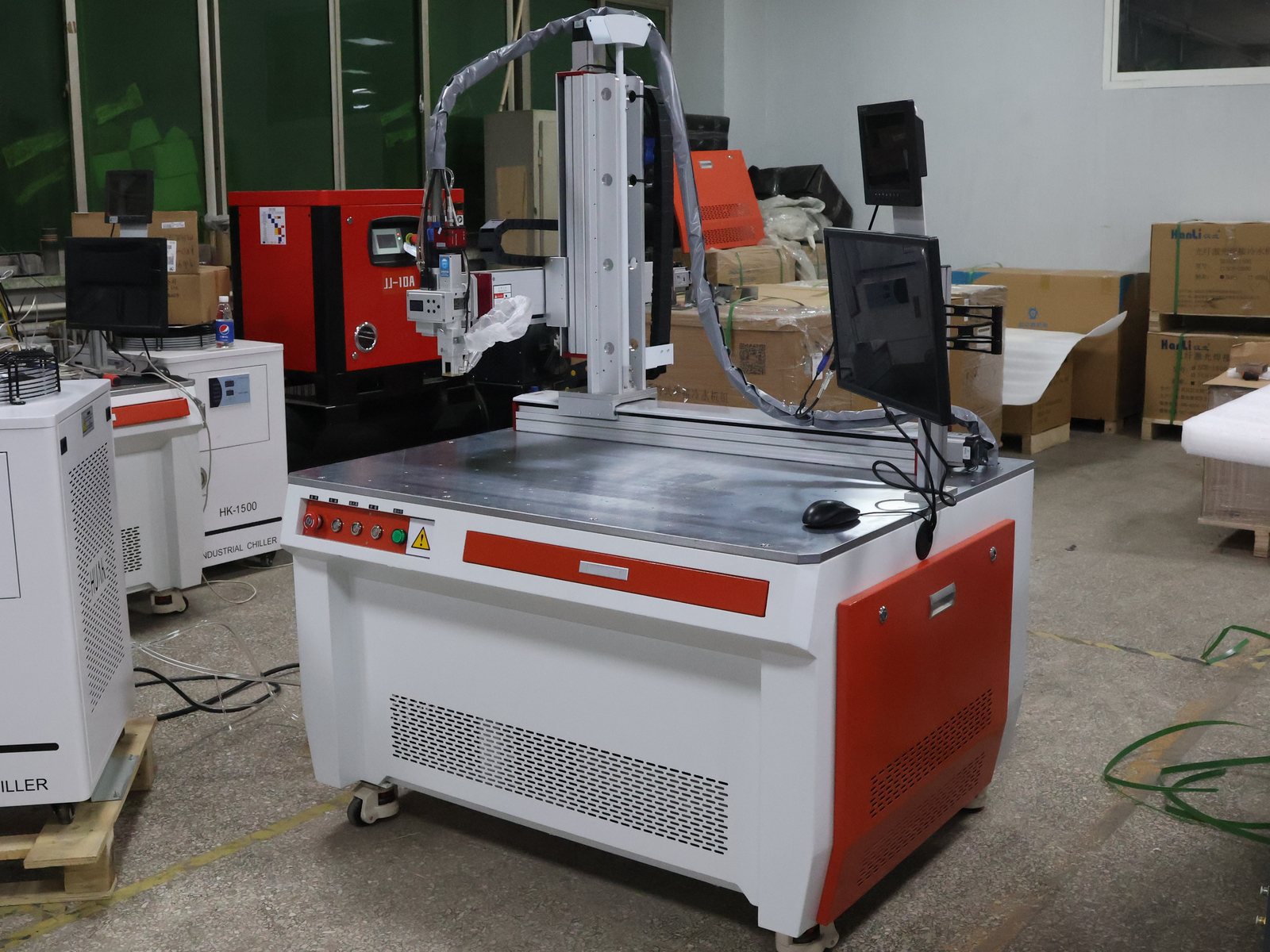
It is used for repeated parts where clamping, path accuracy, recipe storage, and process monitoring matter more than operator mobility. The buyer specifies work envelope, fixture layout, path programming, shielding gas, and acceptance tests. It is common for structural components, repeated fabrications, and automated production cells.
| Specification field | Why it matters |
|---|---|
| Work envelope | Part size, stroke, clearance, and future part coverage |
| Fixture plan | Clamping, gap control, loading method, and changeover time |
| Weld path and program format | Programming method, teach mode, and recipe storage |
| Shielding and assist gas | Gas type, flow, coverage, and consumption |
| Cycle time | Travel speed, indexing, clamping, and inspection time |
| Monitoring options | Weld monitoring, alarms, logging, and traceability |
| Quality criteria | Penetration, strength, porosity, distortion limits |
| Safety enclosure | Interlocks, guarding, fume extraction, and service access |
Choose platform welding for repeated parts where fixture control, path accuracy, and recipe management matter more than operator mobility.
No. Fixtures control the joint, but the laser process still requires the specified gap, alignment, cleanliness, and clamping.
Last updated 2026-09-20. This glossary is commercial technical information, not legal or regulatory advice.