Is a higher-wattage handheld laser welder always better?
No. Excess power can increase spatter, heat input, and safety requirements without improving a joint that is limited by fit-up or clamping.

A handheld laser welding machine is a portable laser welding system in which an operator directs a fiber-coupled handheld welding head, used for fabrication, maintenance, stainless assemblies, and mixed-production welding.
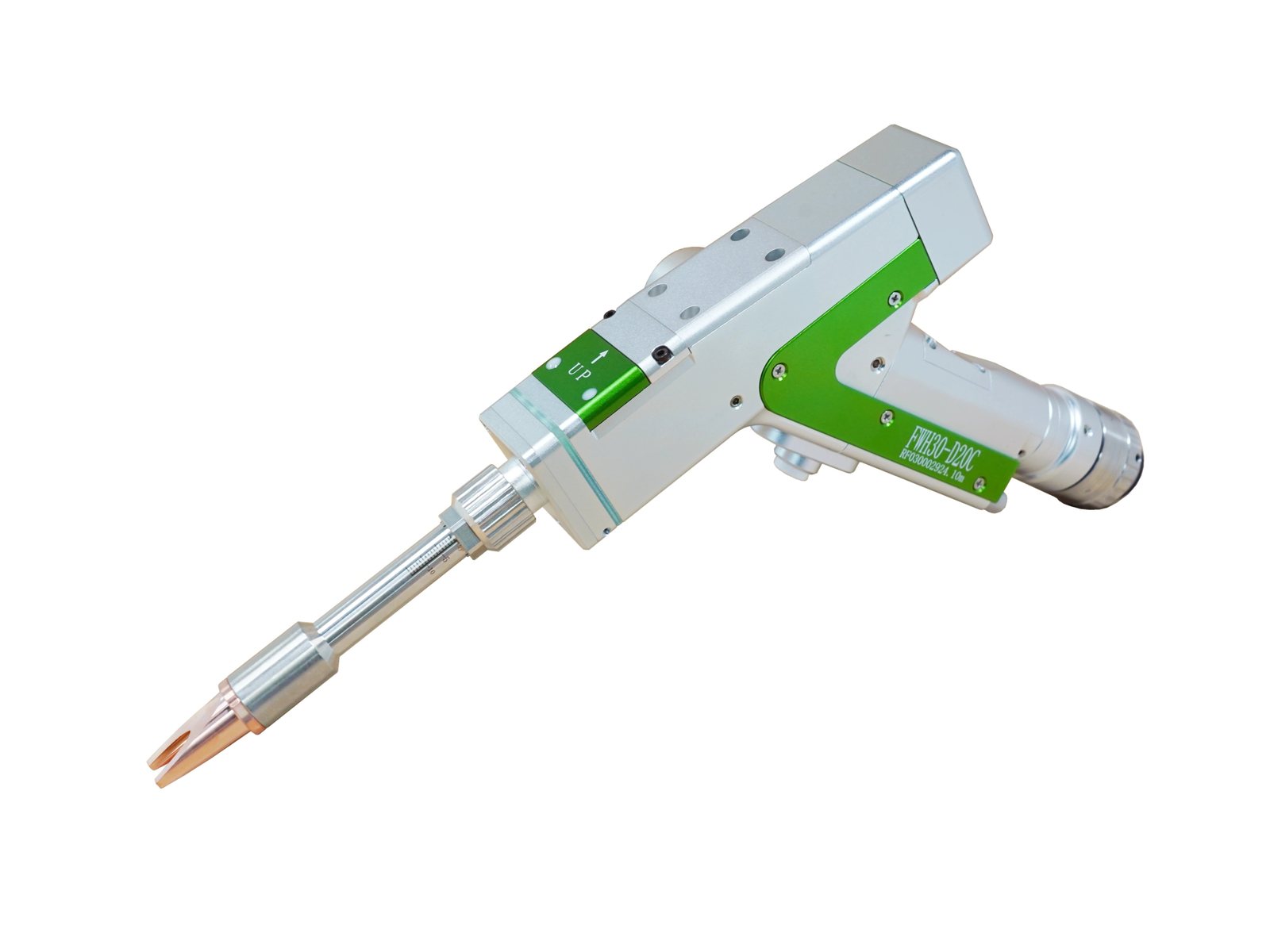
The system combines a laser source, delivery fiber, handheld welding head, cooling unit, wire feeder, gas supply, and safety controls. Unlike platform welding, the operator controls travel direction, making the format suitable for large or varied parts. Results depend on joint type, fit-up tolerance, material, thickness, shielding, and operator discipline. Common applications include sheet-metal assemblies, frames, brackets, stainless enclosures, repair welding, and maintenance work.
| Specification field | Why it matters |
|---|---|
| Material and thickness range | Determines laser power, optics, wire, and gas selection |
| Joint type | Butt, lap, fillet, corner, and edge joints respond differently |
| Allowable gap | Laser welding is less forgiving of poor fit-up than arc processes |
| Cooling type | Air, water, or refrigerant cooling must match power and duty cycle |
| Wire-feed configuration | Single or double wire can extend gap tolerance when validated |
| Electrical and gas requirements | Confirm voltage, phase, compressed air, and shielding gas |
| Safety controls | Class 4 laser controls, eyewear, interlocks, and fume extraction |
| Acceptance test | Test on the buyer's material, joint, and quality standard |
No. Excess power can increase spatter, heat input, and safety requirements without improving a joint that is limited by fit-up or clamping.
Only within limits. Wire feeding and parameters compensate for small gaps; large gaps require joint redesign, better preparation, or fixtures.
Last updated 2026-09-20. This glossary is commercial technical information, not legal or regulatory advice.