How does galvanometer welding differ from robotic welding?
A scanner moves the beam quickly within a scan field for repeated micro-welds; a robot or platform moves the part or head over larger paths. Systems are sometimes combined.

Galvanometer welding uses fast-moving scanning mirrors to position a laser beam for precision spots, seams, and repeated micro-welding operations.
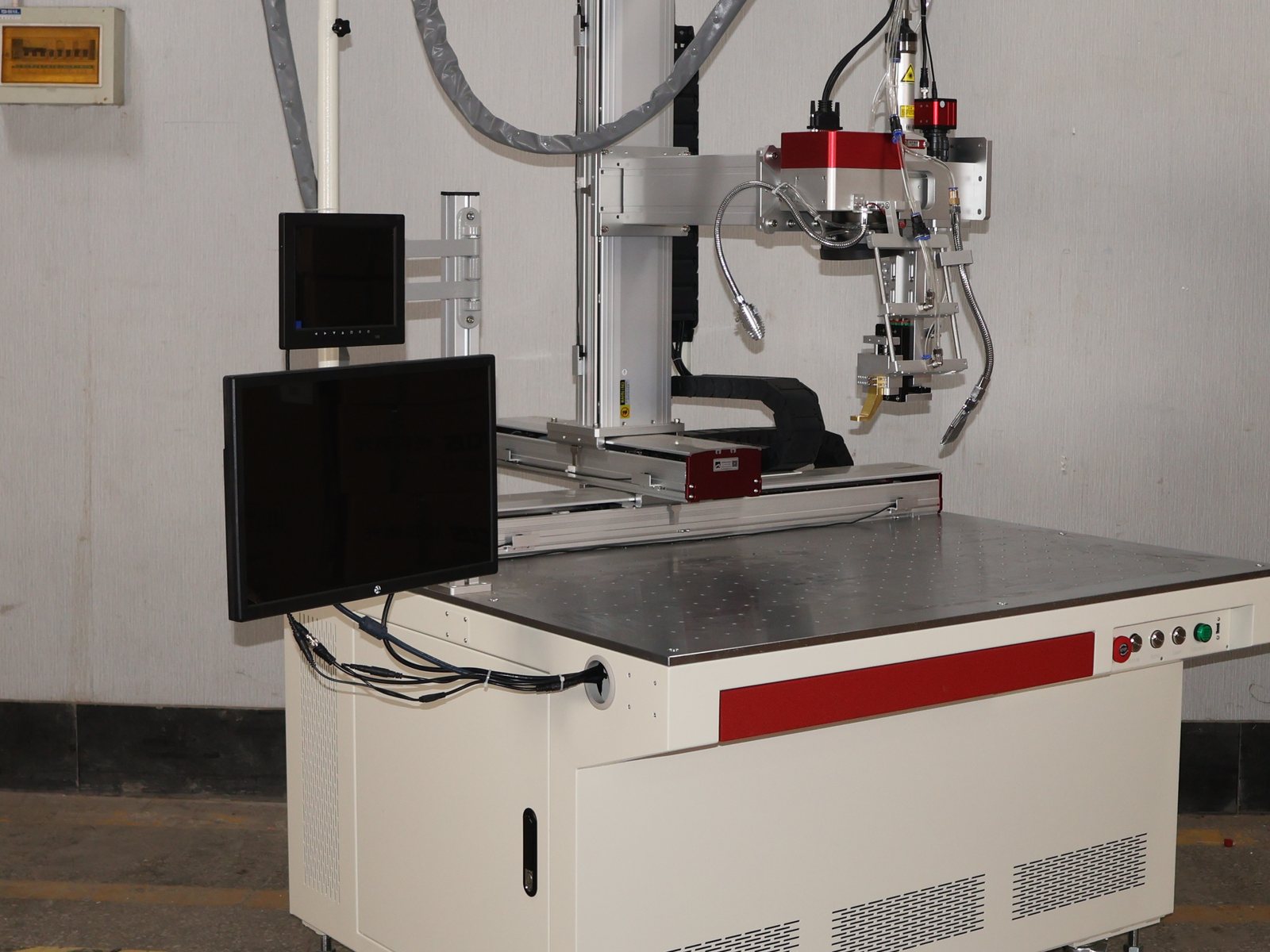
The scanner moves the focal point rapidly within a defined scan field, enabling high-speed repeated patterns without moving the part for every weld. Applications include precision components, electronics, sensors, and battery-related production. Configuration decisions include spot and seam geometry, scan field, focal length, enclosure, interlocks, and cycle-time validation.
| Specification field | Why it matters |
|---|---|
| Spot or seam size | Beam quality, optics, and focal length set the minimum geometry |
| Scan field | Working area reachable without repositioning the part |
| Focal length | Working distance, spot size, and depth tolerance |
| Pattern accuracy | Calibration, thermal drift, and validation method |
| Cycle time | Scan speed, pattern count, indexing, and inspection |
| Fixture design | Part location, clamping, and thermal management |
| Enclosure and safety | Interlocks, guarding, eyewear, and fume extraction |
| Acceptance test | Weld geometry, strength, and repeated-production samples |
A scanner moves the beam quickly within a scan field for repeated micro-welds; a robot or platform moves the part or head over larger paths. Systems are sometimes combined.
Precision spots, seams, patterns, and repeated micro-welding on electronics, sensors, batteries, and small components.
Last updated 2026-09-20. This glossary is commercial technical information, not legal or regulatory advice.