Which laser is best for metal serialization?
Fiber lasers are commonly used for high-contrast marks on metals, but the final choice should be confirmed on the exact alloy, finish, and mark size.

A laser marking machine creates permanent identification, such as serial numbers, 2D codes, batch codes, and logos, on materials using fiber, CO2, or UV laser energy.
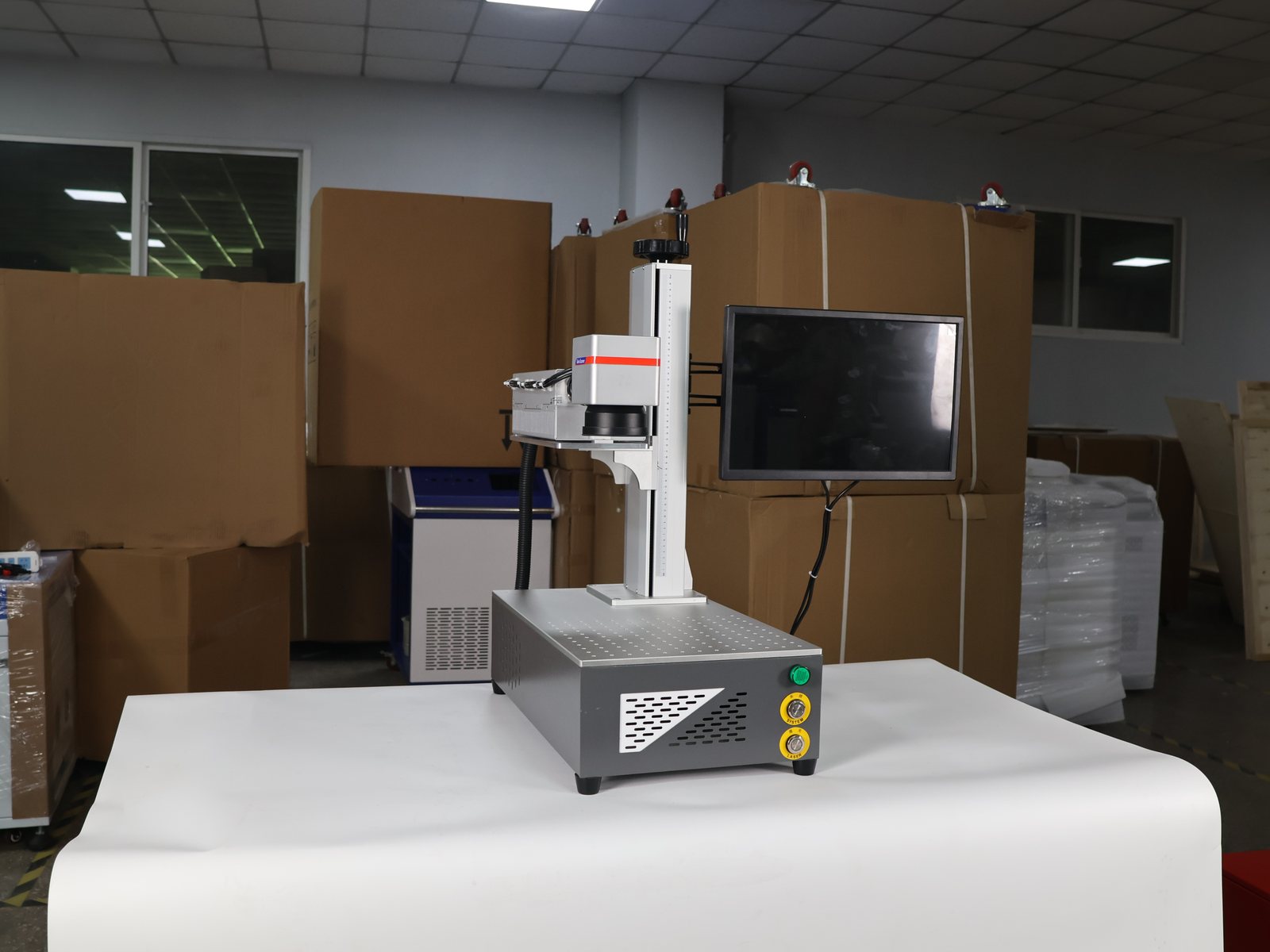
The laser type is selected by material absorption and permanence requirements: fiber systems are common for metals, CO2 for many organics, and UV for low-heat marking of sensitive plastics and electronics. Traceability systems also include data integration, serialization rules, fixtures, verification readers, and process records.
| Specification field | Why it matters |
|---|---|
| Material and finish | Grade, color, coating, and surface texture change mark contrast |
| Mark type and size | Human-readable text, logos, serials, barcodes, or Data Matrix |
| Readability standard | Define the verification method and code grade |
| Permanence tests | Abrasion, chemicals, heat, sterilization, or UV exposure |
| Data source | Manual entry, file import, or MES/ERP integration |
| Cycle time | Marking, handling, focusing, and verification must fit takt time |
| Fixture repeatability | Flat, curved, rotary, or 3D scanning requirements |
| Safety and extraction | Class 4 enclosure, interlocks, and fume filtration |
Fiber lasers are commonly used for high-contrast marks on metals, but the final choice should be confirmed on the exact alloy, finish, and mark size.
Neither is universally better. UV suits low-heat marking of sensitive materials; fiber is often more economical for metals.
Last updated 2026-09-20. This glossary is commercial technical information, not legal or regulatory advice.